Sunday, December 1, 2013

Hope

As we lit the first of our Advent candles we focused on hope and a verse from Romans 15.

and again Isaiah says,
‘The root of Jesse shall come,
   the one who rises  to rule the Gentiles;
in him the Gentiles shall hope.’ 

May the God of hope fill you with all joy and peace in believing,                                                                 so that you may abound in hope by the power of the Holy Spirit.

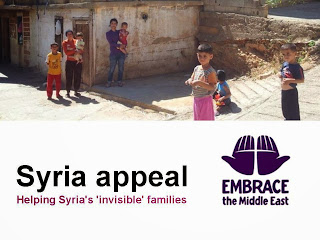
Through December we shall be supporting the Embrace the Middle East Appeal for Syria.

I began by reflecting on an episode of Country File filmed in Whytham Woods, just to the North of Oxford.  They had been exploring the way Charles Elton had pioneered the study of ecology in recognising that what appears to be 'dead wood' is actually a nursery for a great deal of life!


I had taken a photo of a sole green shoot in a sea of wood chippings, bark and dried leaves that I had taken in the ruins of Mary Jones's house in North Wales.  Mary Jones as a young girl trekked 25 miles across the Welsh Mountains in order to purchase a Bible from Thomas Charles of Bala.  He was so moved by her determination to buy a Bible that he joined with friends to form what has since become the Bible Society, committed to making the Bible available in people's own language at an affordable price the world over.

It prompted me to think of the wonderful analogy used in that verse by Paul!


That quotation was from Isaiah 11, a passage that maps out what it takes to rule in God's way in a kingdom that is God's.  It is one of those passages that was used as a model by Jesus as he came to be King in the Kingdom of God, the Prince of Peace.

The Peaceful Kingdom

A shoot shall come out from the stock of Jesse,
   and a branch shall grow out of his roots.
The spirit of the Lord shall rest on him,
   the spirit of wisdom and understanding,
   the spirit of counsel and might,
   the spirit of knowledge and the fear of the Lord.
His delight shall be in the fear of the Lord.
  
He shall not judge by what his eyes see,
   or decide by what his ears hear;
but with righteousness he shall judge the poor,
   and decide with equity for the meek of the earth;
he shall strike the earth with the rod of his mouth,
   and with the breath of his lips he shall kill the wicked.
Righteousness shall be the belt around his waist,
   and faithfulness the belt around his loins.
  
The wolf shall live with the lamb,
   the leopard shall lie down with the kid,
the calf and the lion and the fatling together,
   and a little child shall lead them.
The cow and the bear shall graze,
   their young shall lie down together;
   and the lion shall eat straw like the ox.
The nursing child shall play over the hole of the asp,
   and the weaned child shall put its hand on the adder’s den.
They will not hurt or destroy
   on all my holy mountain;
for the earth will be full of the knowledge of the Lord
   as the waters cover the sea.

That gives rise to that wonderful hope Paul spoke of.


I then went on to explore what the basis for that hope was.

I suggested that Romans was written by Paul to provide an insight into the faith that meant so much to him.  In the opening chapters he sets out the difference having faith in Christ Jesus makes as it brings forgiveness and a whole new life for the believer that is shaped by the grace of God.

Then Paul gets to chapter 7 when he sinks into the depths of despair.  He knows exactly how he should live and what he should do ... and does the opposite.

The good that I would I do not, the evil that I would not ... that I do!

The use of all those single-syllable words in the William Tyndale influenced authorised version is brilliant.  The only two syllable word is evil and that weighs heavily on Paul.

How does he resolve that dilemma?

He moves on to chapter 8.

A most wonderful chapter as it is so down to earth.

We know that the whole creation has been groaning

 The world Paul lived in with the cruelty of the Roman regime and much that went on was a world he felt to be groaning in its pain.  Our world is just such a world too.

I am sometimes accused of being a bit bleak in my preaching.  That's in some measure due to the fact that I do about 25 funerals in a year and often no weddings at all, and few baptisms.  Most of my pastoral miniistry is spent with people who are hurting in all sorts of ways.  In my preaching I find myself wanting to speak into that world because that's the world I inhabit.

It's not just the world at large that groans ... we each of us groan inwardly too - even those of us who are of faith, are Christian.

and not only the creation, but we ourselves, who have the first fruits of the Spirit, groan inwardly

But it is fascinating that Paul uses the analogy of  groaning and pains and is thinking about one particular kind of groaning and pain.  He is thinking of the groaning of labour pains.  As a man I cannot comment ... but that pain can be among the most excruciating ... and yet out of that pain comes new life.

We cannot explain it. We cannot understand it.  But maybe it is of the very nature of the world of God's creation that there is pain.  The insight is that out of pain can come new life.,  Out of the deadwood comes new life.
 
We know that the whole creation has been groaning in labour pains until now; and not only the creation, but we ourselves, who have the first fruits of the Spirit, groan inwardly

This gives grounds for the hope that we have that is at the heart of our faith .. the hope that 'saves us' or better perhaps the hope that 'makes us whole'.

For in hope we were saved

It is the very nature of hope that it cannot be seen.  This is what Paul goes on to emphasise!  And it is a powerful insight!


For in hope we were saved.  

Now hope that is seen is not hope.

For who hopes for what is seen?  

But if we hope for what we do not see, 
we wait for it with patience.

How can we have such hope?

This is the genius of what Paul shares.

Hope is not something we can generate in our own strength.  We cannot work it up.  We cannot muster hope ourselves.

The hope that can make a difference in our lives.  The hope that means so much to Paul is the hope that comes from a strength and a power that is from beyond ourselves.

How often we face those dark times when we cannot get through on our own.

But there is a strength, an unseen power, that God gives to help see us through.

Faith does not enable us to escape the darkness.  The faith that gives rise to hope enables us to get through the darkness and emerge into the light.

Likewise the Spirit helps us in our weakness; for we do not know how to pray as we ought, but that very Spirit prays for us with sighs too deep for words. 

I love that expression Paul uses.  At those darkest times when we cannot find the words to express our prayers, neither can God.  Words fail God too!


That hope, that is unseen by its very nature, is grounded in the love that can be seen, the love for which there is evidence.  For Paul such hope is grounded in the love that we have seen in Christ.  And that is a love that nothing can separate us from!

Who will separate us from the love of Christ?
Will hardship, or distress, or persecution,
or famine, or nakedness, or peril, or sword?

No, in all these things we are more than conquerors
through him who loved us!

For I am convinced that#
neither death, nor life, 
nor angels, nor rulers, 
nor things present, nor things to come,
nor powers,
nor height, nor depth,
nor anything else in all creation,
will be able to separate us 
from the love of God
in Christ Jesus our Lord. 

From Romans 8 Paul goes on in Romans 9-11 to explore the place of Jewish people and non-Jewish people in God's kingdom and then in chapter 12 comes to the point where he says, Therefore!   And in chapter 12 and following he appeals to those who have discovered such faith, with the hope it engenders, all of which is grounded in the love of God in Christ so to live their lives that they will follow faithfully in the footsteps of Christ, seeking to overcome evil with good in their commitment to the way of love.

Before a final very personal postscript in chapter 16 addressed to those who belong to the church in Rome by name, he comes to the point of rounding off his thoughts in those most wonderful words!

May the God of hope fill you
with all joy and peace in believing,
so that you may abound in hope
by the power of the Holy Spirit.

Our reflections over we paused a moment and then shared in the words of a meditation inspired by these words for Paul in Romans 8 and 15.

 Hope

There’s a darkness abroad in our world
There’s a darkness deep in our hearts
It’s into that darkness that a light shines
It’s the flickering, fragile light of hope
The hope that makes us whole
And when the candle goes out?
The light of the flame no longer seen?
The hope remains.
Unseen, yet very real.
A hope that is grounded in love,
A love that nothing can separate us from.
May the God of hope
Fill us with all joy and peace in believing,
So that we may abound in hope
By the power of the Holy  Spirit.

Romans 8:18-25, 35-39 and  15:12-13


After singing that wonderful hymn, All our hope on God is founded, one of our Deacons, Sharon, led us in prayers she had been prompted to put together in the light of the course she is doing at the University of Gloucestershire.

Highbury Prayers by Sharon with help from Spinoza

As many of you know, I am currently studying Religion, Philosophy and Ethics.  More specifically, amongst other things, I am looking at the philosophy of Spinoza.  His thinking, though in some ways at odds with my own beliefs, expresses a mindset with which I identify and I am finding myself engaged in what appears to be a kind of metaphysical gymnastics in an attempt to make sense of it.  When I was asked to prepare prayers for this morning, I struggled with my current sense of instability as I strive for reconciliation within my own mind.  I decided that the best way forward would be to approach the prayers honestly, presenting my thoughts as they are and trusting God to find the sense which evaded me.
Spinoza lived in Holland during the 17th Century, the beginning of the age of enlightenment.  In the wake of scientific advance, this was a time when many people found their thinking caused them to question the teachings of the Church.  Many who dared to voice their concern were persecuted.  Spinoza, working from home as a lens grinder by day, and writing philosophy for his friends during his spare time, found himself having to be very careful how he presented his thinking in order to avoid possibly dire consequences. Thus, he presented an account of creation which spoke of an infinite Nature as God.  Since God is infinite, he said, there can be nothing outside of him, thus, all creation, of which we are inextricably part, is God: a pantheist view which also subscribed to determinism.  This means that all of Nature hangs together as a single mechanism.  What we perceive to be evil is only that part of Nature which challenges our power to exist within that mechanism.  The esoteric nature of his writing enabled him to remain under the radar to some extent as far as the authorities were concerned, whilst still questioning popular thinking and dogma within intellectual circles.  He faced ostracism by both Christians and Jews.

Spinoza believed, amongst other things, that all of nature (God) formed a Truth, of which our finite, and comparatively tiny, minds could never become fully aware.  By undertaking research and pooling our minds, however, we are able to maximise our power to ‘live’ by improving our knowledge – what he terms, ‘adequate ideas’.
My prayer, is, therefore based upon a lack of understanding of the infinitude of the perfect universe and our insignificance within it.  It is not ‘Spinozist’, but is very much inspired by Spinoza.

Offer a period of silence, in which people are invited to bring their difficulties, or those of others, to God in their thoughts.  Alternatively, invite them to contemplate the wonder of their own existence, in terms of mind and body.

Lord God,
As we gather together today, as one, in your name, we are filled with a sense of awe, both at your mightiness and our own insignificance.  Yet you charge us with caring for this great creation of yours.  Psalm 8 reads:

O Lord our God, how majestic is your name in all the Earth.  You have set your glory above the heavens. From the lips of children and infants you have ordained praise…..  When I consider the heavens, the work of your fingers, the moon and the stars which you have set in place, what is man that you are mindful of him; the son of man that you care for him?  You made him a little lower than the heavenly beings and crowned him with glory and honour.  You made him ruler over the works of your hands.  You put everything under his feet, all flocks and herds, and the beasts of the field; the birds of the air, and the fish of the sea…….  O Lord our God, how majestic is your name in all the Earth!

Yet, Lord, as your mighty and beautiful creation surrounds us, we find ourselves apparently at odds with its workings.  Powerful weather systems wreak havoc within communities, and internal battles on a cellular level lay waste to our bodies.  Seismic shifts shake the very foundations of our cities, and our minds become clouded, blinkered by our aspirational desires.

Lord, our understanding is finite and you are eternal.  We can never comprehend the enormity of your power.  We attempt to describe our surroundings and are thwarted by things too tiny to discern, or too vast to fathom: In Geneva, neuroscientific research in The Human Brain Project looks into the workings of our mind, and physicists at the Large Hadron Collider seek evidence for the tiny particles responsible for hanging our universe together.  Still we know more about the moon than the deepest trenches of our own oceans, and the Hubble Space Telescope has provided data to astrophysicists enabling them to hypothesise as to the rate of expansion of what is, already, a boundless universe……

Our suffering in the midst of all this appears so insignificant and yet, Lord, you assure us that you know every hair on our heads.  You designed and know every weather system, every neurological structure, the geology of our planet and the universe in which it sits.  Our immense knowledge is mere anecdote in the face of all that remains a mystery to us.  Our efforts to make a difference seem almost futile tinkering.  So we, your creation, whisper to you of our distress.  We bring before you those who have found themselves at the mercy of natural disaster, illness, financial worry and all the other plethora of difficulties which befall us in our comparatively minute existence.  We cannot understand what plans you have for our futures; we will never understand why our lives should be beset by challenges.  But, as the rest of your creation works with such precision and maintenance of order, help us also to recognise that everything we face is part of your perfect will.

Help us to uphold your teachings of love and hope; to support and find solace in one another and to continue in awe at the mighty beauty of your creation.
In Jesus name

Amen

Sunday, November 24, 2013

Here and Now ... not Then and There

Here and now
That’s where it begins
Not there and then
But here and now
That’s where it begins
Here where I am
Now at this moment
That’s where it begins
And then,
And only then
Will it spread!

Acts chapter 1 verse 8 has to be one of my favourite verses.

But you will receive power when the Holy Spirit has come upon you; and you will be my witnesses in Jerusalem, in all Judea and Samaria, and to the ends of the earth.’

It works in all sorts of ways.

And it sets us up today on what some think of as the last Sunday of the Christian Year as we get ready for the start of Advent, the build up to Christmas and the start of a New Christian Year.

First of all this little verse acts as a guide to the whole of the Book of Acts.   From my youngest days when at primary school I did a project on the missionary journeys of St Paul I have loved maps that illustrate the story of the Bible.  One way to map the Book of Acts is to track the different journeys all the Apostles make.  And you come up with some fascinating maps.

Another way is to think of circles that go out from where the whole ministry of Jesus came to its climax in his death and resurrection, Jerusalem.

The first few chapters take place in Jerusaelm.  Then the message of Jesus is taken out further through Judea and Samaria, and then out further to Antioch and over to Ethiopia, and then out further to Cyprus and what we think of as Eastern Turkey, then out further to Corinth and Athens, then out further to Rome – at which point Acts finishes as, after all, all roads lead to Rome.

But in the letters Paul writes he clearly has every intention of pushing beyond Rome to Spain – one final push, as it were.   And as those circles reach out to that point they reach the point that is the boundary of the world.  The Pillars of Hercules at the Gates of Gibralter were said to have the words inscribed on them Ne Plus Ultra – there is nothing beyond!  You’ve reached the ends of the earth!

I think it is wonderful to read through Acts and see the way in which the early church came together and all they stood for, what energised them, how through the Acts of the Apostles the message of Christ spread out to the ends of the earth inside a generation – something remarkable going on.

Through this year as we have been putting together a new shape for our church I have turned to Acts to help the thinking that I have been doing on the church and what it is … and I have been exploring Acts in our evening services.  We’ve reached Acts 17 this evening.

I wanted to do it in a way that could act as a point of reference for our thinking on the church and so I  have been putting those sermons up on to the web site – I’ve given that series of sermons on Acts a title …

Mapping the Church of Tomorrow – A 21st Century Look at Acts.

It seems to me that Acts helps us to map out what the church of today should look like so that it can become the church of Tomorrow.

And if you want a glimpse of what that entails, it all begins here.

In this verse.

But you will receive power when the Holy Spirit has come upon you; and you will be my witnesses in Jerusalem, in all Judea and Samaria, and to the ends of the earth.’

This verse doesn’t just map out the Book of Acts, it doesn’t just map out how we should be the church of today and become the church of tomorrow.

This verse maps out the task each of us has.
Being part of the church, sharing this wonderful Christian faith is not something to keep to ourselves.  It is something to share.

It’s nothing less than the love of God, that wonderful love that is made real in Jesus, let loose in the world by the power of the Spirit that makes a difference to our lives, to the way we think, the things we do, the lives we lead.

And that love we cannot keep to ourselves.

So where do we share it.

We start where we are.

Here and now
That’s where it begins.

Think individually.

Here and Now.

The person next to you, the people around you – how do you share something special with them that then seeps out into their lives.

I have to say there’s that hymn – each smile a hymn, each kindly word a prayer.

Graciousness – inclusion.  Welcome to all who come.

Then think of those in your family, friends, those you meet.  And then the witness goes further afield and spreads.

With no limits.

If all that counts for each of us individually it is important for all of us together as well!

We as a church are located here in this place.  Collectively as a church we have an opportunity to witness from where we are.

Here in this place – many people come here each week – to witness there

And in our immediate locality.  In these streets.

With children though our partnership with St Luke’s we are involved with St John’s and so on Saturday we are going to share a stall with them at the St John’s Christmas Fair – an opportunity simply to make our presence felt and share something together – raising the profile of Transformers and the Holiday Club in the school.

Felicity, together with Neil and Peter, have been very much involved in a revival of the local Fairview Community Assocation.  It has been good to work more closely with them.

And as Christmas approaches we are going to develop that work more as we are going to have our Christmas Café in association with the Fairview Community Association and our friends from St Luke’s.

This is something for us all to be part of and all to be involved with.  Very much hope that it is something we can all support – Felicity is going to share some more news about the way we can build up our involvent in our local community through the FCA.

Felicity on the Fairview Community Association


So …

Here and now
That’s where it begins
Not there and then
But here and now
That’s where it begins
Here where I am
Now at this moment
That’s where it begins
And then,
And only then
Will it spread!

There’s one thing I have missed.

That’s the first part of this verse.

But you will receive power when the Holy Spirit has come upon you; and you will be my witnesses in Jerusalem, in all Judea and Samaria, and to the ends of the earth.’

We cannot do it on our own.


We have that strength from beyond ourselves that makes all the difference – only in that power from the Holy Spirit can we hope to witness to the love of God and the difference Jesus Christ can make in our lives and in the lives of other people too.

Sunday, November 17, 2013

Stand in the Light - Prayers for Prisons Week

Lord, you offer freedom to all people.
We pray for those in prison.
Break the bonds of fear and isolation that exist.
Support with your love prisoners and their families and friends,
 prison staff and all who care.
Heal those who have been wounded by the actions of others,
especially the victims of crime.
Help us to forgive one another,
to act justly, love mercy and walk humbly
together with Christ in his strength
and in his Spirit, now and every day. Amen


How do we read the Bible?

For understanding.  To get our mind round things.  Easy for that to be a focus.

Value of a verse that speaks very simply into the lie we lead.

One such verse has been chosen for Prisons Week as the theme this year.

It is a week we have supported for many years, together with Langley House.  It was in Lawrence Squires time at the beginning of the 60’s that the churches of Cheltenham had the vision to open a home to provide accommodation for ex-offenders.  And so the Knole was opened.  People from Highbury decorated a room.

Adrian Stanley was working for Langley house and built up those relationsh8ps with Katherine too.

And we have continued to support it.

Each year they provide a set of prayers for the week.

This year my eye caught those prayers and I felt they could be helpful in our focus on prisons but also for each one of us as well.

And so I want to reflect on what those prayers say to us and say to us about our concern for those in prison.

We have one particular link in a prison context – that’s good to hear from.

And that is Moffat – an update from him

Then the verse  - it comes from Malachi 4 and I want to link that with John 8:12

But for you who revere my name the sun of righteousness will arise with healing in its wings.
Malachi 4:2

I am the light of the world; those who follow me will not walk in darkness but will have the light of life.


Stand in the Light

Day One For Those Who Work in Prisons

Those who are busy and weighed down with responsibility, stop, stand in the light and find
strength and rest.

This is something for each of us to take to heart.  If you have one take a look at your diary.  Look at the to do list.  Maybe you can think of things in the week past, in the week to come.   Maybe it’s not so much the busy things once done as the round of basic things that you face this week – and you would love to have the busyness back of a full diary and a full house – that in itself is a burden to carry.

1
Those who are busy and weighed down with responsibility, stop, stand in the light and find
strength and rest.

2
For all who work in prisons, and care for those who are imprisoned, it is
very easy to get sucked down into the suffering and needs of others, to be so committed to
ensuring that others have the tools they need to change and turn their lives around that they
forget their own needs. In times of stress and pressure, of financial constraint and shortage
of resources, prison staff want to make a difference but need to remember to take care of
themselves, of one another and to offer support and affirmation.

3
Lord, you said ‘come to me all who labour and are heavy laden’, you said ‘cast your burdens
on me and I will give you rest’, give to each of us and to all who work in prisons and carry the needs and
burdens of others, the grace, strength and courage to continue, and the rest they need for
renewal and recreation. In Jesus’ name. Amen.


Day Two For Those Who Are Prisoners

Those laid low, rise up, stand in the light and find your feet.

That’s something we each of us can relate to at times.   It may be you are in a time that is laid low.  You may know of someone personally.  Think of yourself.  Bring that person to mind.


1
Those laid low, rise up, stand in the light and find your feet.

2
It is so hard to get up when we feel we have dropped off not just God’s radar, but everyone else’s as well. It is hard to have faith when so many things seem to have gone wrong, when we are stuck in shame and paralysed by fear of the future. This is not all that there is; the light of God’s presence shines in the darkest place and is not and cannot be overcome.

3
Loving Lord you always come to meet us wherever we are. Give to each of us, those who are on our minds at the moment and to all those serving sentences in our prisons the strength to lift first their eyes and then their hearts to recognise your light. Raise us and them up to stand in your presence and serve you, set us and them free from the power of darkness, make us and them ready to start again and learn to walk in your Light. In Jesus’ name. Amen.

Day Three For Victims of Crime
Those living with loss, in pain and fear, take a deep breath, look up and out, stand in the
light and find courage.

Think of moments of loss – you have experienced or those close to you.

1
Those living with loss, in pain and fear, take a deep breath, look up and out, stand in the
light and find courage.


2
Do not be afraid. Jesus said, “I am with you always to the end of time”. Seek healing for the past, invite Him into your present and future, and take hold of his promise to accompany you on your journey into survival.

3
Lord Jesus, you gathered around you friends and disciples and empowered them with the
Holy Spirit to face ridicule and disbelief, danger and death, yet still to persevere. We pray
for the victims of crime, for all who have suffered loss, pain or injustice. Fill them with that
same Spirit to confront the challenges in their lives, to witness to your healing power with
strength and confidence. Build up their trust in you so that they can manage their fears and,
relying on your grace and strength, continue their journey onward into the Light. In your
name. Amen.

Day Four For Those Who Work in The Criminal Justice System

Those carrying heavy burdens of responsibility, lay them down awhile, stand in the light and
find rest and peace.

Think of responsibilities we have – responsibilities at work, towards others, to family, to ourselves.  Weight of responsibilities

1
Those carrying heavy burdens of responsibility, lay them down awhile, stand in the light and
find rest and peace

2
Those of us who daily have difficult and life-changing decisions and judgements to make can be overwhelmed by the weight they carry and by the anxiety of making mistakes. Take courage from the example of Jesus who trusted in God to hold Him still, through arrest and injustice, to death and Resurrection. Stand firm in the knowledge that He brings light out of darkness and He will lead us into that Light.

3
Loving God, whose will for your people is to bring justice and mercy to all the earth, be
present with all who work in the criminal justice system. Enlighten their understanding and
inform their judgements. Give to them the grace of discernment, that they may seek your will
in all things and work always for the common good. Keep them firm in their commitment
to exercise authority and responsibility impartially, in the knowledge that all power comes
from you and that you will provide the strength needed for the journey onwards. Shine your
light into all the difficult situations that they face and the judgements that they make, that
justice and mercy might truly reign in all the earth. In Jesus’ name. Amen.


Day Five For The Families

Those who are hurting, lift your heads, stand in the light and find healing.

Think of those who are hurting – in our own context, further afield – victims of war

1
Those who are hurting, lift your heads, stand in the light and find healing.

2
 It is hard to be the parent, friend or partner of someone convicted of serious wrongdoing, caught up in darkness and pain that are not of your making, to be held responsible for the actions of
others, whose misdeeds over which you have no control. How might we have failed them?
How can we help them to grow and to make amends? It is hard too, to walk alongside loved
ones who have been the victims of others, those who are in desperate need of healing and
wholeness. Confronted in so many different ways by the pain of evil and the desire for light
and healing, we need God’s grace and strength to make the first move, to lift our heads and
see the light, the hope for the future.

3
O God, your hands are strong to save us and swift to bless. Bring wholeness and healing
to the families of all victims or perpetrators of crime. Give to them the gifts of grace and
strength that they might stand in your light and grow towards a better future; support their
loved ones and show the fruits of repentance in changed lives, lived for your glory and the
good of others. Lord, in your name we pray. Amen.

Day Six For Our Communities

Those who can make a difference, join together. Link your arms you people, link your hearts;
stand in the light and find strength.

Making a difference in our world

1
Those who can make a difference, join together. Link your arms you people, link your hearts;
stand in the light and find strength.

2
Often it is hard to believe that we can make a difference,
but as drips of water wear away stones, as waves change coastlines, as seeds become grain
and fruits, so we have God’s grace and strength when we join hearts, minds and hands, and
work together, standing in His light and doing His will to build community. We are designed
to live and grow together in order to flourish, to tend and restore to wholeness those who
are the victims of others, and to welcome back those who have been outcast and punished
and need support to build new lives.

3
Loving God, you call us into fellowship with you and with one another. Shine your light into
our lives and our communities, fill us with your love and send your Holy Spirit so that we
may be tireless in working to build up our communities into places of safety and creativity.
By ourselves we may be weak, but in your light and with the Spirit’s power we can have faith
and hope that the future can be different, lives transformed and your will be done. Hear our
prayer for the sake of Jesus our Lord. Amen


Let’s remember that wider world.

Stand in the light.

Sense of the light of Christ’s presence


And do our part too.

Sunday, November 10, 2013

Healing of the Memories - Reflections for Remembrance Sunday

For those I spoke to in my first two churches who had actually been in the trenches in the first world war, and for those I spoke to in all of my churches who had seen fighting in the second world war and in those more recent conflicts we mention in our Act of Remembrance, the Remembrance of Remembrance Sunday was troubling, and could and can at times be deeply troubling.  The Remembrance of things seen and things done in war is now recognised as something that needs not just understanding but often professional support.  It is perhaps no coincidence that two of the great war poets of the First World War, Siegfried Sassoon and Wilfred Owen met in the Craiglockhart War Hospital in Edinburgh when the first steps were being taken towards an understanding of what in only the last twenty years or so has been recognised as Post Traumatic Stress Disorder.

Where people are deeply troubled by remembrance of horrific events there are ways of helping through a medical response, through counselling.  And all of those are to be valued.  Prayer, I believe, does not replace such treatments.  It does, I  believe complement them.

And one specific kind of praying is, it seems to me, helpful.  And that is Prayer for the Healing of the Memories.  Such prayer finds its focus in the healing grace of the Jesus who is the same, yesterday, today and forever.

Just as Jesus reached out to touch the man whose life had been devastated by leprosy, the woman suffering the agonies of an illness that seemed to have lasted a life time in a loving kindness that brought healing, so too the loving kindness of Jesus reaches out to touch us.  When a troubling mental picture comes to mind of something from the past, bring into that picture an image of Jesus, reaching out to bring that touch of deep down healing that he alone can give.  A peace beyond all understanding.

It’s interesting how people have found it helpful to picture Jesus.

The Sculptor Jacob Epstein was one of those profoundly troubled by experiences he had in the First World War.  It was then that he turned first to sculpting the figure of Jesus.  Begun in 1917, completed in 1919, he hoped his sculpture, The Risen Christ, would be used as par of a War Memorial.  No one would accept it.  It now stands in the Scottish National Gallery of Modern Art in Edinburgh.  He described it as an invitation to see ‘Man’s inhumanity to man’ from Christ’s point of view.  In preparation for the finished sculpture he created a working model or ‘maquette’ of the hands of Christ – they are now in the New Art Gallery in Walsall the resting place for so much of his work and collection.

In one moment the raised hand seems to be saying a halt to the madness of all this destruction and at one and the same time that hand is raised in blessing.  And it brings the blessing of healing because it is wounded.

The risen Christ who appeared to Thomas bears the wounds of crucifixion in his hands.  It is the wounded Christ who is risen.  It is the very ‘woundedness’ of the Christ who is the ‘wounded healer’ that enables him to be the healer of those troubled memories.

When Llandaff Cathedral was re-built after it was bombed in the Second World War it was to Jacob Epstein that the Cathedral authorities turned.  His Christ that stands with outstretched arms over the nave of the Cathedral seems to say to those whose remembrance is scarred … come to me all you that labour and are heavy laden and I will give you rest.

It is this Jesus who is the same, yesterday and today and forever who comes in his woundedness to bring healing to those memories that trouble.

One of the most remarkable sculptors whose life spanned the whole of the the 20th century was Josefina de Vasconcellos.  A person of profound Christian faith, passionately committed to working with disadvantaged youngsters in the wilds around her home in the Lake District, she found herself working on a sculpture of Christ in the middle of the 1930’s.  It was to be entitle Christ the Judge.  It was carved from ‘a huge piece of Portland stone left over from Sir Christopher Wren’s rebuilding of St Paul’s Cathedral in London.”  As Margaret Lewis says in her biography, “The stone was one of the monoliths laid out for Wren to select for the pillars of St Paul’s.  He rejected it as being not quite perfect, and after waiting for nearly three hundred years the stone was finally given life by Josefina.  The work,” Margaret Lewis goes on to say, “ was inspired by Josefina’s anxiety at the growing clouds of war.”

She took as her inspiration that most powerful of passages in Mark 4

Mark 4:35ff

35 On that day, when evening had come, he said to them, ‘Let us go across to the other side.’ 36And leaving the crowd behind, they took him with them in the boat, just as he was. Other boats were with him. 37A great gale arose, and the waves beat into the boat, so that the boat was already being swamped. 38But he was in the stern, asleep on the cushion; and they woke him up and said to him, ‘Teacher, do you not care that we are perishing?’ 39He woke up and rebuked the wind, and said to the sea, ‘Peace! Be still!’ Then the wind ceased, and there was a dead calm. 40He said to them, ‘Why are you afraid? Have you still no faith?’ 41And they were filled with great awe and said to one another, ‘Who then is this, that even the wind and the sea obey him?’

In all likelihood the earliest of the Gospels to be written, Mark’s gospel was being written in the mid 60’s AD.  It was a time when war was looming large over the horizon in Galilee and then in Judea and Jerusalem.  Many Jewish people had come to the conclusion that war was the only way to oust the Roman power – and they took to arms.  Rome did not take the rebellion sitting down and sent their legions down to take back Galilee and then Judea and Jerusalem.  It was a horrific time of bloodshed and carnage.  And culminated in the destruction of the Temple in AD 70.

Read Mark’s gospel against that backdrop and it feels very much an appeal to those Jewish people who had chosen to follow the one who had ridden into Jerusalem on a donkey, to hold fast their trust and their faith in him.

It felt as if the waters of destruction and war were overwhelming them – how wonderful to be reminded of the storm that threatened to overwhelm and those words of Jesus, Peace!  Be still!

This was what inspired Josefina de Vasconcellos as she continued to work on her sculpture through those war years in her Lake District Home.   “The base,” Margaret Lewis suggests, “reveals Josefina’s fears for humanity: cruelty, killing, the worship of fanatises, the viciousness of the serpent striking fiercely .  Christ’s blessing and forgiveness stands above this.”

In 1950 this ‘monumental, eight-foot figure, first called Christ the Judge, became known as The Prince of Peace when it was adopted as the centrepiece for the National War Memorial at Aldershot, where, when Philippa, one of our Time for God Volunteers took these photos it still stands, albeit in some neglected state.

When that remembrance threatens to overwhelm and the storm of memory rages at its worst how powerful to bring to mind those words of Jesus,  “Peace!  Be still!”

Jesus Christ, the same yesterday, today and for ever.

The tragedy of Remembrance Sunday is that today it is not just the remembrance of war that troubles.  The ravages of war continue to fill the headlines.

So, I found it moving when David Roberts forwarded me only this last week to a story in the Times of Israel.

The headline reads …


In midst of Syrian war, giant Jesus statue arises
Improbably, under cover of truce, 12-meter figure installed
on mountain overlooking ancient pilgrim route to Jerusalem

The Armenian sculptor of this giant bronze sculpture is not named. The work was commissioned in 2005 by Syrian Russian, al-Ghadban, and London-based foundation with private sponsorship and inspired by the  Christ the Redeemer statue in Rio de Janeiro.

By 2012 Syria was ravaged by civil war and the sponsoring foundation was on the verge of abandoning the project when they consulted Syria’s Greek Orthodox Patriarch, John Yaziji.  He was determined the project should go ahead.

The story of how it came to be erected on 14th October is remarkable.  “The three armed groups in the area - Syrian government forces, rebels and the local militias of Sednaya, the Christian town near the statue site — halted fire while organizers set up the statue.”   Associated Press report (http://www.timesofisrael.com/in-midst-of-syrian-war-giant-jesus-statue-arises/)

Words Jacob Epstein shared twenty years after completing his Christ is Risen sculpture, on the eve of another war come very much to mind as I think of that bronze statue of Christ in Syria“I should like to remodel this ‘Christ’.  I should like to make it hundreds of feet high, and set it up on some high place where all could see it, and where it would give out its warning, its mighty symbolic warning to all lands.  The Jew – the Galilean – condemns our wars and warns us that “Shalom, Shalom”, must be still the watchword between man and man.”’

Jesus Christ is the same, yesterday, today and forever.

Through the international partnerships that bring us together with churches the world over we have received a letter this week from a church in Syria and its pastor.

It is heart-rending to read the appeal he has sent to our churches this week for prayer and support … and moving too as one realises that it is into the middle of this conflict they seek to bring the presence of Christ

“Considering this inhumane and sad situation our Church has established a polyclinic to serve the community around us regardless of denominational affiliation by assisting those in need of medical care, and especially trying to help patients with chronic diseases in need of long-time medical assistance.”  Describing the worshipping congregation of 400 the letter goes on to say, “Our people will continue to work and pray for peace and safety.”

And what is happening in Syria is inextricably linked with our Remembrance of the First World War.  I found myself reading that leaflet from Middle East Concern about how to pray for the Middle East as I was standing right next to the war memorial roll on the wall of our church.

“There are, it suggests, three historical eras that set that context:
  • Ottoman Empire ruled much of the region (and followed a number of previous empires)
  • Western Colonial era post World War One; current nation states created by the West; most countries are colonial constructs, ruled either by a monarchy (e.g. Jordan) or endured one or more coups leading to one-party dictatorships (e.g. Egypt, Iraq, Syria)
  • This era is being ended (or is it?) by a clear call for the people’s involvement in their governance; it is unclear what will emerge.

I have always felt that to honour the memory of those who lost their lives in war we should echo the longing they had in the midst of that war for peace and commit ourselves to work for the peace they longed to see.

If we are remembering that First World War this day, how important it is to seek peace in Syria.  The crisis facing the people of Syria is beyond our imagining and the worst humanitarian disaster for many, many years.  That’s what has prompted us from Thursday’s Deacons meeting to support the Syria Appeal of Embrace the Middle East.

Working through our Lebanese partners, we are empowering a network of Syrian churches to provide emergency food parcels to the most vulnerable families.


Christ, the wounded healer who in the midst of the storm says, Peace!  Be Still! speaks into the ravages of war in Syria in that truce of warring factions that enabled that sculpture to be stand on Cherubim Mountain.  How much more does he speak in the work for peace of that Church in Syria and of the work of those many Syrian churches that are in partnership with Embrace the Middle East.

So much to pass on at Highbury

If you give a little love you can get a little love of your own

A blessing shared at Highbury

Now and the Future at Highbury

Dreaming Dreams Sharing Visions at Highbury

Dreaming Dreams Sharing Visions

Darkness into Light